Connect Specialist Therapy
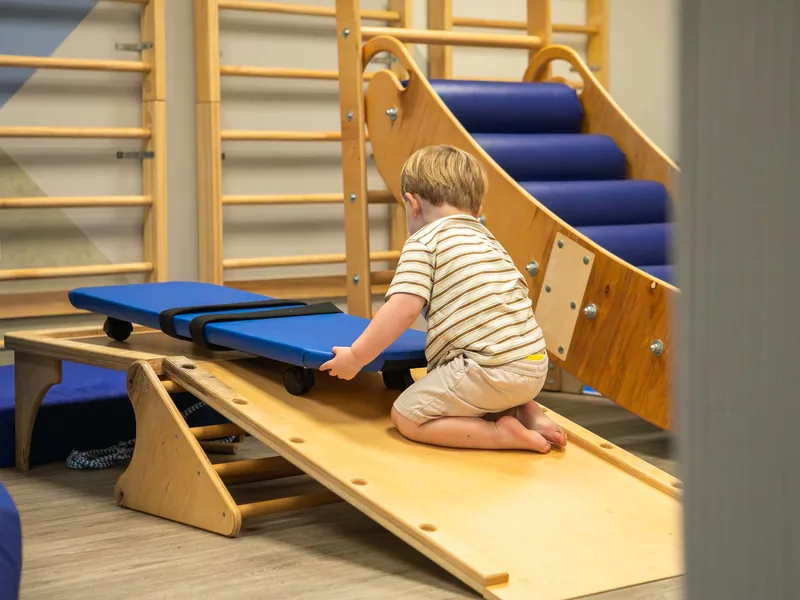
A young boy kneeling on a wooden ramp pushing a scooter board in the Connect soft play room

Movement foundations for everyday life.

Our Occupational Therapy motor skills and handwriting programmes are individualised interventions designed to support the development of the underlying movement skills a child or young person needs to participate confidently and successfully in everyday activities. Depending on assessment findings and agreed goals, programmes may focus on gross motor skills, balance, coordination, postural control, bilateral integration, body awareness, core stability, motor planning (praxis), fine motor skills and functional participation.

Developing movement and handwriting skills.

Developed from assessment

Motor skills and handwriting programmes are developed following Occupational Therapy assessment and are tailored to the individual child's strengths, needs and the activities they are finding difficult. Our Occupational Therapists may deliver direct intervention, alongside developing a structured programme that can be embedded into school, home or everyday routines. Activities are carefully graded and reviewed as the child's skills, confidence and needs change.

Sensory motor circuits

A sensory motor circuit is one way of incorporating purposeful movement and sensory experiences into the school day. A short, structured circuit can provide opportunities for children to move, organise their bodies and prepare for participation in learning, while also developing skills such as coordination, balance, body awareness, sequencing and motor planning. Rather than using the same circuit for every child, our Occupational Therapists consider the child's individual sensory and motor profile and how they respond to different types of movement and activity. Circuits may include a carefully selected combination of alerting, organising and regulating activities, adapted according to the needs of the child or group.

How we deliver motor programmes

Our therapists can develop programmes for individual children, small groups or whole classes, depending on the needs of the education setting. We can observe the child and school environment, consider the space and equipment available, and work collaboratively with education staff to create a programme that is practical, achievable and easy to embed within the school day. Where a programme is facilitated by school staff, our Occupational Therapist can provide demonstration, guidance and training so that activities are delivered safely and with an understanding of their purpose. Programmes are reviewed regularly to consider progress, gather feedback and adapt the activities, level of challenge or support required.

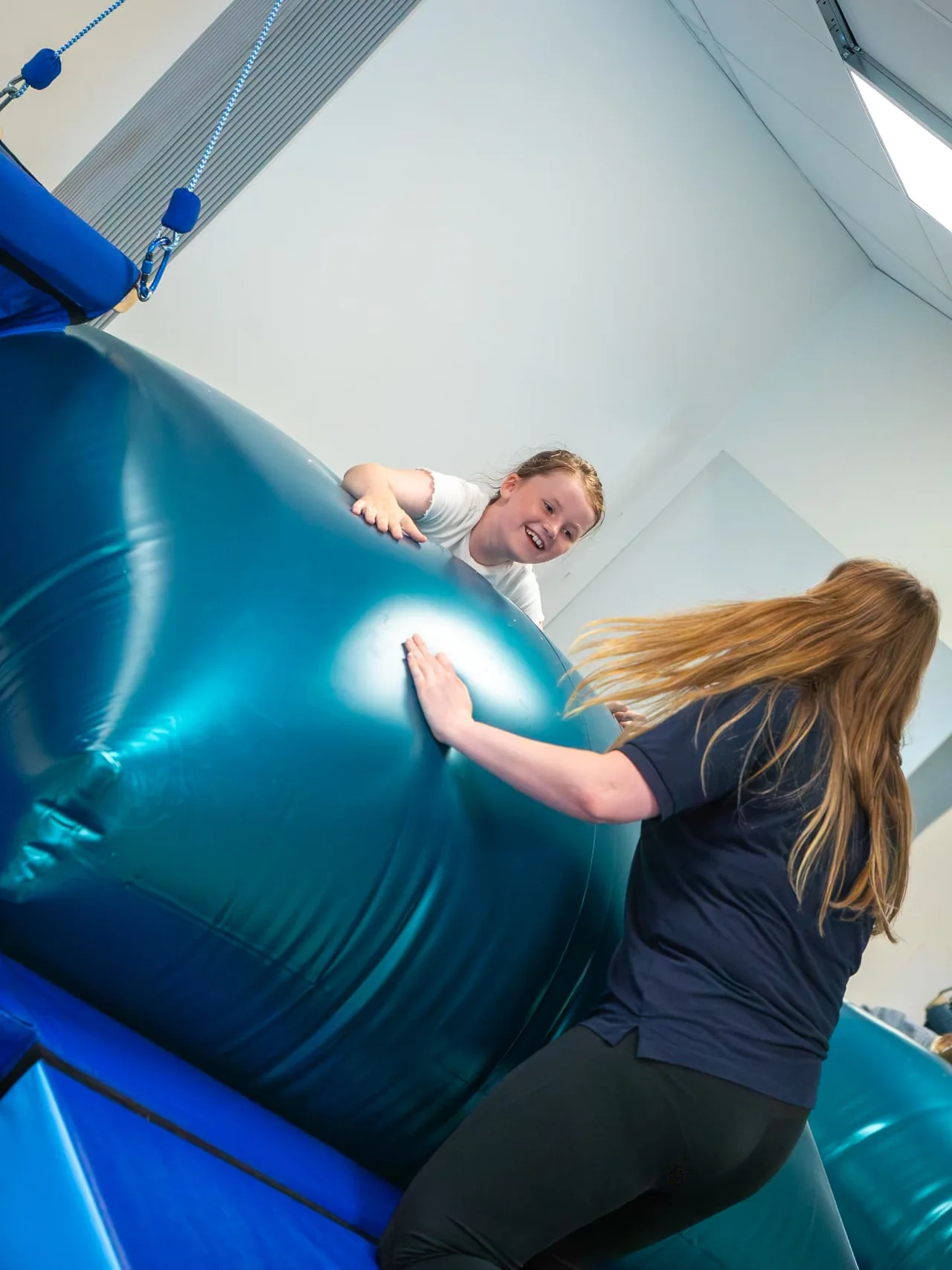
A girl lying over a therapy ball with the therapist in the soft play room

Handwriting programmes

Handwriting is a means of expressing language, just like speech, and it also leaves a lasting trace. It is a physical way of expressing thoughts and ideas and a means of communicating with others. We cannot write unless we have been taught how to, a fact which is sometimes ignored.

Handwriting is a very complex skill to master, one which involves linguistic, cognitive, perceptual and motor components, all of which have to be coordinated into an integrated fashion.

It is important to understand that children with additional learning needs and health conditions may have difficulties with mark making and handwriting. Handwriting requires communication between the brain, co-ordination effort of the eyes and muscles of the hand, fingers, wrist and forearm. The child must be able to have developed strength and dexterity necessary for holding a pencil, while keeping a steady hand when moving cross the page to produce micro-movements. The child must also be able to sit at the writing station with an effective posture within their core stability and be able to sit still and attend.

For the children we support with a range of learning needs and physical needs, writing requires an enormous amount of energy, focus and practise.

The Handwriting Programme will support the process of handwriting and will cover Posture, Pencil Grip (fine motor skills), Paper Position and Pressure and Fluency.
More than getting children moving

The aim is not simply to get children moving. We use purposeful, individualised movement experiences to support the motor foundations required for meaningful participation in learning, play, independence and everyday life.

Not sure where to begin?

We'll help you work out the right next step.

Let's talk

Ready when you are.

Start with a free 30-minute conversation about your child, your questions and what might help.

Talk to our team